
If you’ve been thinking about getting away for the weekend but don’t know where to start, you’re not alone. Weekend trips can feel like they should be easy to plan, but somehow they get complicated fast.
Here’s the thing: they don’t have to be.
Carlos and I take weekend getaways year-round. A quick trip to St. Augustine when we lived in Florida, spontaneous trips to New Orleans with my boys, and even glamping near Helen, GA, with nothing planned but a hike and a bottle of wine.
Now that we’re based in North Georgia, our weekend trips look a little different, but the planning process stays the same.
The trick isn’t having more time or money. It’s knowing what actually matters when you’re planning a short trip, and what you can skip entirely.
Here’s exactly how we do it.
Quick Tips on How to Plan a Weekend Getaway

• Start by picking a destination from your bucket list and setting a realistic budget that covers transportation, accommodations, food, tours, and activities before you book anything.

• Decide on the style of your trip first (relaxation vs. adventure) because this will determine what kind of accommodations to book and how packed your itinerary should be.

• Pack light by choosing versatile clothing items you can mix and match, and always check the weather forecast so you're not scrambling for last-minute essentials.

Start With Your Destination (Not Your Budget)
I know this sounds backwards, but hear me out.
Before you start crunching numbers, figure out where you actually want to go. Carlos and I keep a running list of places we want to visit, and when the weekend trip itch hits, we pick something from that list.
Why? Because if you start with the budget first, you’ll end up talking yourself out of places you actually want to see. Pick the destination, then figure out how to make it work.
That said, once you know where you’re headed, it’s time to estimate costs. Look at flights (or calculate your road trip gas costs), check accommodation prices, and get a rough idea of what food and activities might run you.
This way, you’re not blindsided when it’s time to book.
Set a Budget That Actually Makes Sense
Once you know where you’re going, break your budget into categories. Here’s the breakdown we use:
Transportation: Varies widely. A 3-hour drive might cost $40-80 in gas, depending on your vehicle. Flying adds $300-600 for two people.
Accommodations: $300-500 for two nights on 3-star hotel, depending on location and season.
Food & Coffee: $180-260 for the weekend (two people, mix of casual and one nice dinner).
Tours & Activities: $100-250 depending on what you’re doing.
Buffer/Souvenirs: $50-100
Why separate tours from activities? A 90-minute walking tour ($25/person) requires different planning than a 3-hour kayaking trip ($75/person). Keeping them separate helps you see where your money is actually going.
The flexibility is the whole point. If you get there and decide to skip the museum and grab a nicer dinner instead, you can move that money around without blowing your budget.
What some of our actual weekend trips have cost:
- Savannah (road trip from FL, 2-night stay): $680. Accommodations were the biggest chunk, plus a ghost tour, a river cruise, and eating out for every meal.
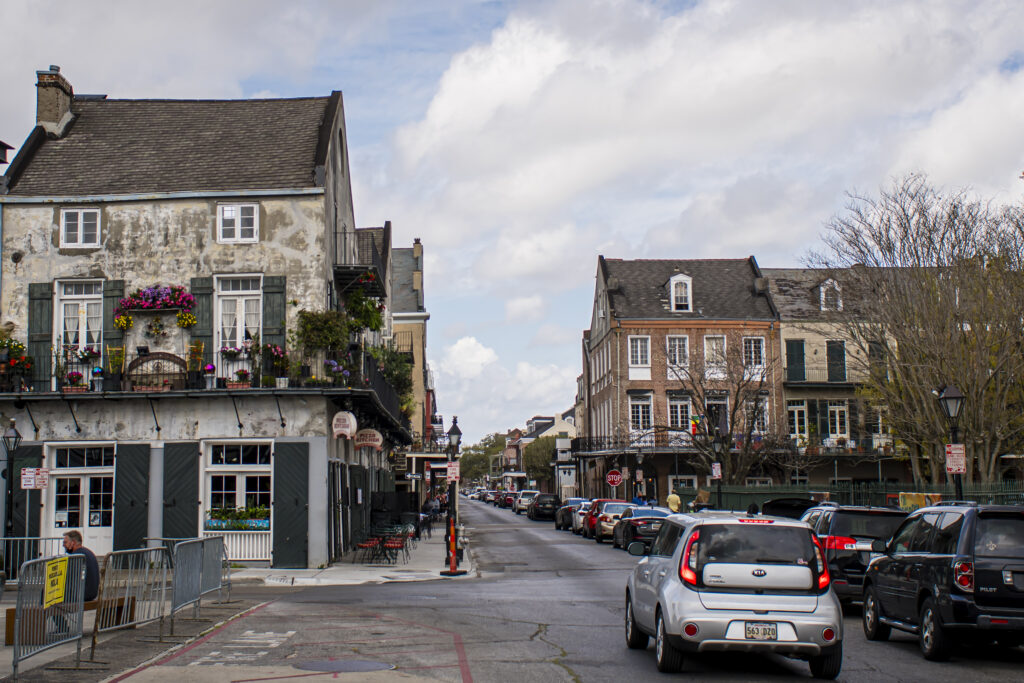
- New Orleans for 3 people (road trip from FL, 3-night stay): $1500+. It was a mom-and-son trip, and we stayed at Hotel Provincial right in the center of the French Quarter. We also splurged on food because… It’s New Orleans. No regrets.
- St. Augustine (2 nights, when we lived in Florida): $550+. This includes the trolley tour, the Museum of Wax, the Lightner Museum, Villa Zorayda Museum and a ghost tour.
Your totals will vary based on where you’re coming from, what you drive, and how you like to travel. The point is to know your categories so you’re not surprised.
Decide What Kind of Trip This Is
This step is huge, and most people skip it or don’t even realize it.
Before you start booking accommodations, talk about what you actually want this trip to be. Are you looking to relax and recharge? Or are you cramming in as many hikes, tours, and adventures as possible?
If it’s a recharge trip, you’ll spend more time in your room, so it will make more sense to invest in the accommodations. Book a hotel with a good bed, a balcony, or a VRBO within walking distance to coffee and restaurants. Plan maybe one activity per day, max. The goal is to come home rested, not exhausted.
If it’s an adventure trip, you’ll be out the door most likely by 8 am and back after dark. Don’t waste money on a fancy hotel you’ll barely get to enjoy. Book something clean and comfortable, and put that extra $100 toward the kayak tour or the better restaurant.
Decide this first. Everything else gets easier.

Book Accommodations Strategically
Once you know the vibe of your trip, you can start looking at where to stay.
Here’s our booking system: before we look at a single listing, we decide on one non-negotiable feature we need in the room.
For us, it’s a decent-sized bathroom. If the bathroom situation looks cramped in the photos, we move on. For you, it might be free parking, breakfast included, or walkability to downtown.

Filter by that non-negotiable first, then compare prices on what’s left.
Read reviews strategically. Skip the 5-star and 1-star reviews. The 3-star reviews tell you what the place is actually like. Look for patterns: if three people mention thin walls or bad water pressure, believe them.
Check the cancellation policy before you book. Some places charge full price if you cancel within 7 days, while others may be flexible up to 24 hours. Know before you commit.
On taking reviews too seriously:
I’ve learned to stop letting reviews sway me so much. Where you stay is personal. What bothers one person might not bother you at all.
Of course, pay attention to red flags like cleanliness issues or safety concerns. But a guest who leaves 2 stars because the lights were too dim or the decor wasn’t contemporary enough? That’s not something I’d let change my decision.
When to book:
For popular destinations like Savannah, Charleston, or Asheville, book 5-6 weeks out for the best selection. For smaller towns or off-season travel, you can often book a week before and still find good options.
Figure Out Your Transportation
We drive almost everywhere. Anything under 12 hours, we’re hitting the road.
Why we prefer driving:
No airport security, baggage fees, or flight delays. We can pack the cooler, the camera and hiking gear without worrying about weight limits. Our car is there when we arrive, so no rental costs or Ubers. And we can stop whenever we want for photos, food, or a quick stretch.
A note on gas costs:
I can’t give you an exact number because it depends on too many variables: your vehicle, current gas prices in your area, and how far you’re going.
What I can tell you: Always calculate based on your local prices and your actual vehicle’s MPG. I’ve included a gas calculator at the end of this post so you can plug in your own numbers.

Our driving rule of thumb:
- Under 3 hours: Easy day trip or leave Friday after work
- 3-5 hours: Leave Friday late-afternoon, arrive late, start fresh Saturday
- 5-7 hours: Take a half day on Friday or split the drive
If you’re flying:
Book 3-4 weeks out for domestic flights. Tuesdays and Wednesdays are usually cheapest. For weekend trips specifically, a Friday evening departure and Sunday evening return tends to work best without burning PTO.
Pro tip: Use Google Maps to check real drive times for your specific departure day and time. A “4-hour drive” on a Friday at 5 pm might actually be 5.5 hours with traffic.
Plan Your Itinerary (But Leave Room to Breathe)
Here’s what a realistic weekend itinerary looks like for us:
Friday: Arrive, check in, grab dinner nearby. Maybe a short evening walk to get oriented. That’s it. Don’t overplan arrival day.
Saturday: Morning: One main activity (tour, hike, or attraction), lunch at a place we researched ahead of time. Afternoon: One more activity or free time to wander. Dinner: The nicest meal of the trip
Sunday: Morning: Breakfast, coffee, one quick stop if there’s time, head home by early afternoon to beat Sunday evening traffic
What we’ve learned:
Two planned activities per full day are plenty. Three is pushing it. Four means you’re rushing and won’t enjoy any of them.
Build in buffer time. Tours run late, and you’ll want a coffee break or time to wander around. If your schedule is packed minute-to-minute, you won’t have room for the unexpected moments that make trips memorable.

On tour timing:
Walking tours take about 90 minutes on average. If you schedule yours in the morning, you’ll still have most of your day free to do other things.
Adventure tours (kayaking, horseback riding, etc.) can run anywhere from 2-4 hours, including travel time to the meeting point. These usually eat half a day, so planning is crucial.
And then there’s food tours. These will hugely depend on the type of tour, but typically, set aside around 2-3 hours. Also, some of these food tours include so much food that they can easily replace a meal.
Pack Smart (Not Heavy)
Packing for a weekend trip should be simple, but somehow it never is.
My rule: pack items that can be worn more than once and mix and match with different outfits. A pair of black casual shorts, for example, can work with multiple tops and shoes. White sneakers go with just about everything.
For a rough idea, this is what I usually pack.
Clothes: 2 tops that go with everything, 1 pair of shorts or pants (I wear one pair, pack one), 1 dress or nicer outfit for dinner, 8 pairs of underwear, 1 light jacket or layer, pajamas, white or beige sneakers (they go with everything), and a pair of sandals if it’s summer
Toiletries: Travel-size everything (I keep a toiletry bag pre-packed so I can grab and go). Include sunscreen and any medications.
Gear: Phone charger, camera (if you’re not just using your phone), portable battery pack, sunglasses, hiking gear (if needed).
What I always forget and now keep in my car: Bug spray, a small first aid kit, and a water bottle.
The trick is choosing pieces that mix and match. Black shorts work with every top I own. A neutral dress works for a nice dinner or a casual lunch. I don’t pack “just in case” outfits anymore because I never wear them.
Check the weather 5-7 days out. Not 2 weeks (too early to be accurate). Not the night before (too late to adjust). A week out gives you enough time to swap a jacket for a rain layer or ditch the sweater entirely.
Safety Considerations
Before you head out on your adventure, think about safety.
If you’re travelling solo or going somewhere remote, let a family member or friend know where you’re going. Text someone your itinerary: where you’re staying, what trails you’re hiking (if hiking is in your agenda), and when you expect to be back.
Download offline maps for areas without cell service (Google Maps lets you do this). Check trail conditions and weather alerts for your specific location.
Familiarize yourself with the area and bring a physical map in addition to your GPS or trail apps. Knowing where you are and where you’re going is key, especially if you’re venturing into the wilderness.
And always pack essential supplies: food, water, shelter, and a first-aid kit. Better to have them and not need them.
Final Thoughts
For the time being, Carlos and I both work full-time jobs. We don’t have unlimited PTO and most of our recurrent travel happens in 48-72 hour windows.
And we’ve seen a lot.
Weekend trips aren’t a consolation prize. This is how many others actually travel throughout the year. The key is being intentional: pick the destination, set a realistic budget, decide what kind of trip it is, and don’t overpack your itinerary.
You can do this. Pick a weekend on your calendar, choose somewhere within driving distance, and book it.
Your next trip doesn’t require a week off. It just requires a decision.
Estimate Your Gas Costs
We created this calculator to get an idea of what we’re working with when we’re planning our trips. Plug in your numbers and see an estimate of what your drive will cost.
Road Trip Gas Calculator 🚗
*Results are only estimates and are for informational purposes only. Road trip calculator created by Next Stop Adventures.
Need help planning your next getaway? Contact me for my travel planning services.

Hey, I’m Yanitza 👋 Certified travel advisor, U.S. destination specialist, and hidden-gem hunter with over 8 years of experience helping travelers explore deeper and travel slower. I specialize in crafting authentic, stress-free adventures from small towns to scenic hikes and scuba dives. I’m a firm believer that the best stories happen when you venture beyond tourist hotspots. When I’m not planning getaways or writing travel guides, I’ll probably be home rewatching The Vampire Diaries like it’s my job and daydreaming about future adventures in Spain.
I am a big fan of making reservations. I have multiple experiences where I didn’t make a reservation for a hotel I wanted to stay at or an activity I wanted to do and missed out. I have learned from my mistakes and book in advance these days.
This is such a helpful guide! I am planning some weekend trips in the next few months so will definitely be using some of these tips. Transport is something I always seem to forget to look into before I go somewhere.
Thank you so much! I’m glad you found it useful for your trip.
This is a great post! I go on weekend trips often, and I guess I’ve never thought much about all the planning that goes into them. I feel like I’m on autopilot now, haha, but this is such a thorough guide and are all great items to think through. Thanks for sharing!
Thank you! Glad you liked it.
I think consider the tone of a getaway is so important! Sometimes we try and cram far too many different holidays into one and it ends up feeling chaotic. Sometimes you just want to chill, others you want to explore every corner! Great advice.
Totally agree!