
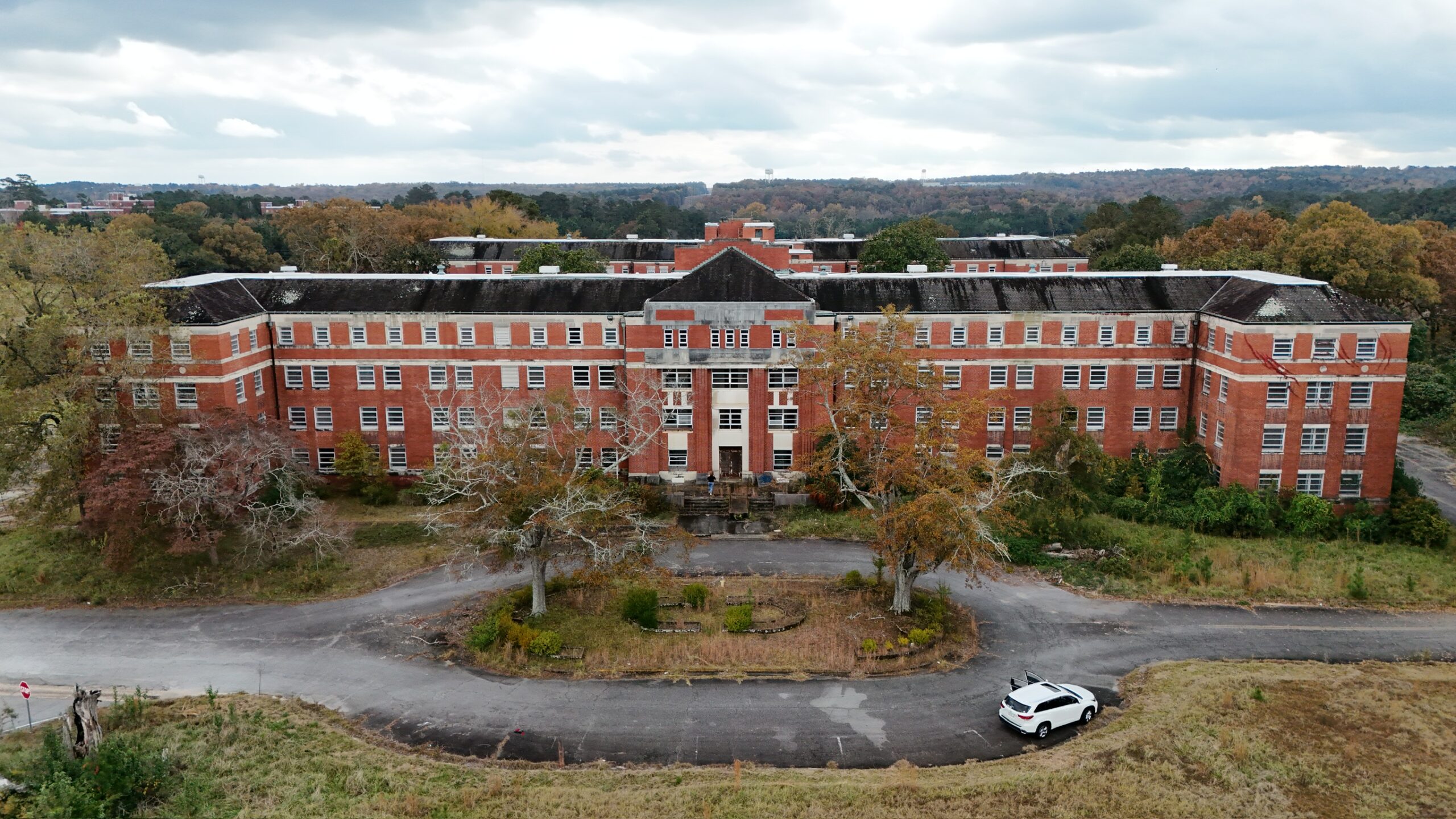
I’ve been fascinated with abandoned historic buildings for a while now and have seen a few here and there. But thanks to my hunt for filming locations, I came across Central State Hospital in Milledgeville, Georgia. One of the buildings on campus, the Jones Building, was dubbed the Fleur-de-Lis Sanatorium on The Originals TV show.
Once I got there, what stunned me most wasn’t the filming connection. It was standing in front of an impressive, decaying building, beautiful nonetheless, and realizing that thousands of people once lived their entire lives inside these walls.
Some arrived as kids. Some died here. And many of them were forgotten the moment the doors closed behind them.
The Central State Hospital campus in Milledgeville, GA, stretches across more than 1,750 acres, with more than 200 buildings at its peak.
Today, some buildings no longer stand, and most of the remaining ones are crumbling and locked down.
But they do have one thing in common. All of them hold stories that never made it into the history books.
🔖 Quick facts about Central State Hospital in Milledgeville, GA

• Central State Hospital opened in 1842 in Milledgeville and became the largest psychiatric hospital in the world by the 1960s, housing between 12,000 and 14,000 patients across more than 200 buildings.

• The campus is now mostly abandoned, with some buildings still functioning, including a small museum that preserves patient stories, artifacts, and the hospital's complex history.

• Visitors can tour the grounds and museum to learn about mental health history, early treatment practices, and the ongoing effort to preserve this historic site.
After a few visits to personally photograph and document this piece of history, I decided to reach out to Jessica Whitehead, Curator and Director of the Central State Hospital Museum, author, and photographer of Seeking Asylum Photography.
I had met her on one of the trolley tours offered by the City of Milledgeville and wanted to hear the real story behind what was once the world’s largest psychiatric hospital.
What follows comes from my conversation with Jessica, along with my own experience walking these grounds. The result is a reminder of how we’ve treated the most vulnerable people in our society, and how far we still have to go.
A 47-Mile Journey to Care
Central State Hospital opened on November 1, 1842, as the Georgia State Lunatic, Idiot, and Epileptic Asylum. The first patient arrived a month later: Tillman Barnett, a 30-year-old farmer, who was brought to Milledgeville from Macon, GA.
The records don’t tell us much about his life before the hospital, but they do tell us how he got there: chained to a wagon, traveling 47 miles over rough roads to reach a place that would provide care.
Tillman spent his final six months at the hospital. He died of what physicians then called “maniacal exhaustion,” a term that I personally think meant many different things depending on who was writing it down.
We don’t know if he found any peace here. We don’t know if anyone visited him. We only know that he was the first of thousands.
That early moment captures both the promise and the tragedy of large psychiatric institutions, which were built as places of refuge.
Places where people who had been chained in basements or locked in attics or left to wander the streets could finally receive treatment.
But they were also shaped by the limits of their era, by what people believed about mental illness, by what they feared, and by what they chose not to see.
How It Became the Largest Psychiatric Hospital in the World
Over the next century, Central State grew in ways its founders never imagined.
A second building was built to more formally separate men and women. Then another. Then another. The pattern repeated itself: overcrowding, a push for funding, a new building, and then overcrowding again. The need always outpaced the capacity.
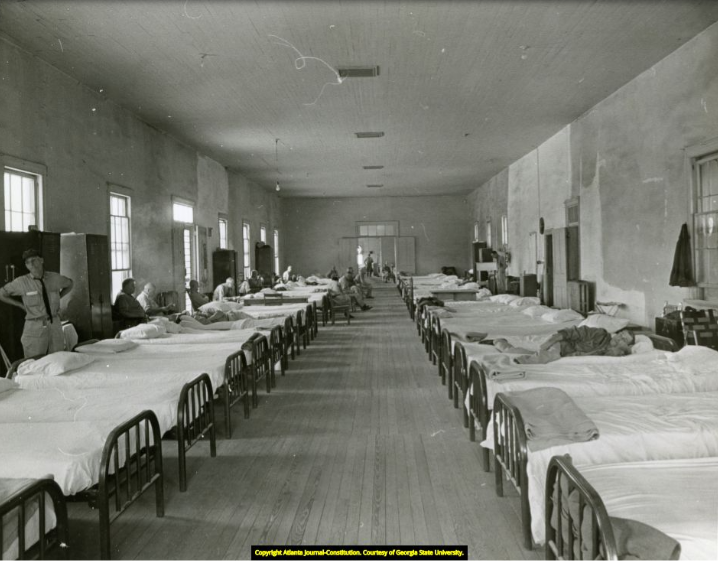
By the 1950s and 60s, Central State had become the largest psychiatric institution in the world. Between 12,000 and 14,000 patients lived here at any given time.
More than 200 buildings were spread across the campus, and thousands of staff members worked around the clock.
The hospital had to be entirely self-sufficient. There was farmland, cattle, hogs, and a slaughterhouse. Patients who were able worked the fields, tended animals, and helped maintain the grounds.
It was part of the treatment philosophy of the time: that structure, labor, and routine could heal a troubled mind.
In many ways, Central State wasn’t just a hospital. It was a small city, hidden in plain sight, where people lived and worked and died without ever leaving the gates.
What Treatment Looked Like Here
Treatment practices evolved over the hospital’s 150-year history. While some of this evolution can be seen as progress, it is still difficult to reflect on.
It takes me a while to wrap my mind around the fact that physical restraints were standard in the early years. Wrist cuffs. Leg irons. Straightjackets. Although at the time, these weren’t punishments.
At least not officially.
They were tools to prevent patients from hurting themselves or others in an era before “effective” medications existed. But the line between treatment and control was, I wanna say…controversial.
Electroconvulsive therapy (ECT) became widespread in the mid-20th century and was used broadly and, at times, indiscriminately. Patients would convulse and lose consciousness. Some improved, while others didn’t.
Today, ECT still exists, but it’s a carefully controlled procedure performed under anesthesia and reserved for severe cases that don’t respond to other treatments.
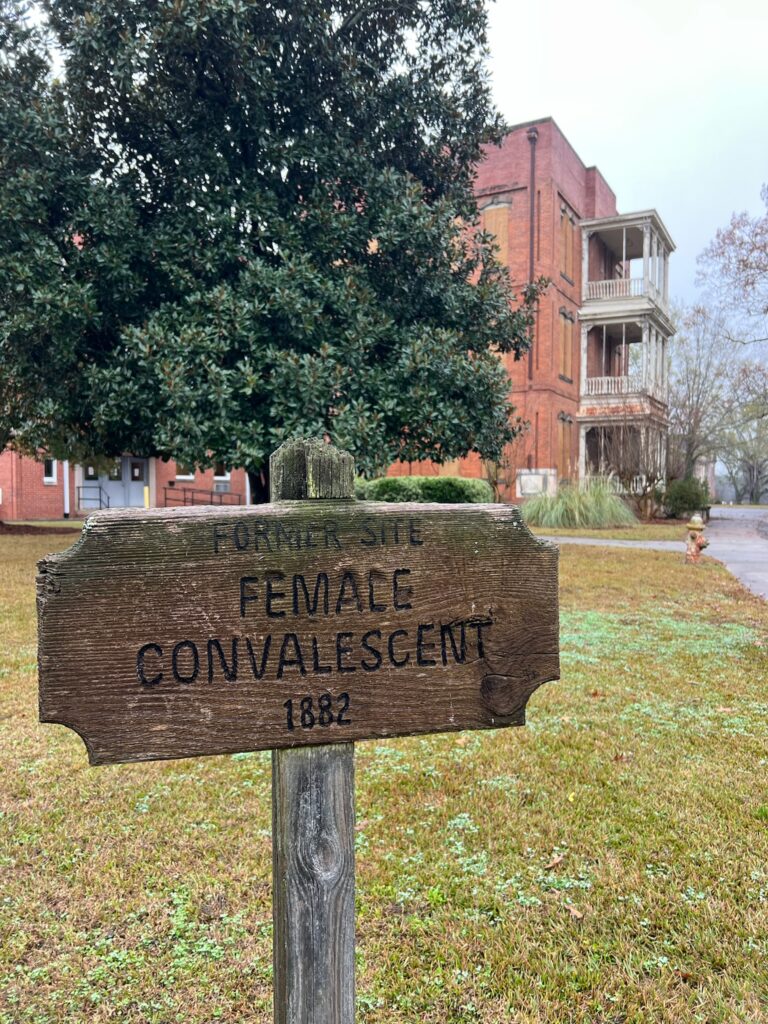
The scale of the problem was staggering.
By the late 1950s, nearly 12,000 patients were being treated by just 48 doctors. And in 1959, an investigation by The Atlanta Constitution revealed something worse: none of those 48 were board-certified psychiatrists.
Some had been hired directly off the mental wards.
Patients were, in some cases, treating other patients. This meant that the already controversial treatments like electroshock and lobotomies were performed by non-qualified practitioners.
The exposé won reporter Jack Nelson a Pulitzer Prize, led to staff firings, and finally forced the state to increase funding after decades of ignored pleas from hospital superintendents.
Furthermore, the neglect wasn’t distributed equally. African American patients were segregated into their own separate and overcrowded building on campus.
When that designated building burned in the late 1800s, Black patients were housed in underground tunnels until it could be rebuilt.
The tunnels weren’t designed for living. They were designed for moving supplies and bodies out of sight. But that’s where the state put its most vulnerable citizens when there was nowhere else to put them.
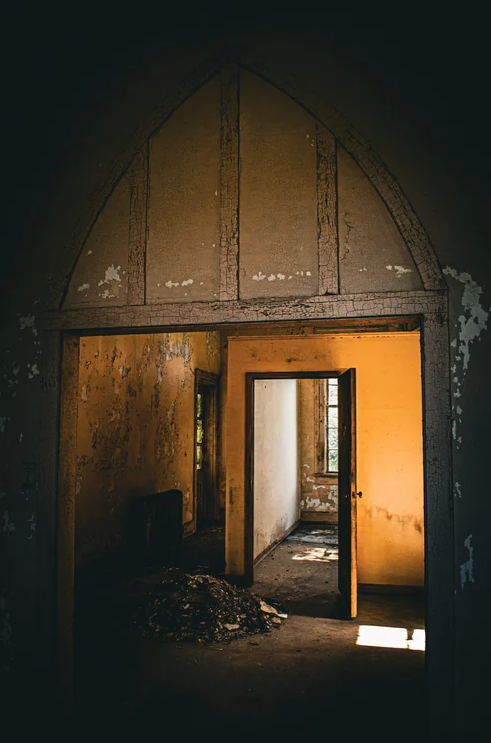
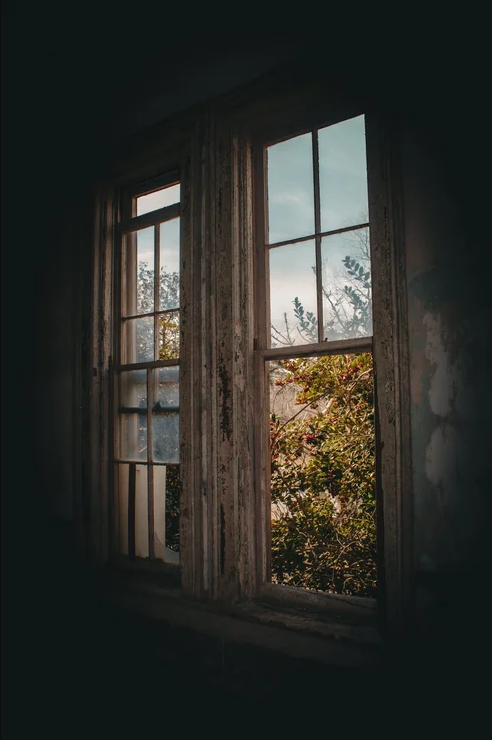
But there was another side to life here.
Creative programs offered patients something beyond clinical treatment. Hands-on activities like painting, crafts, and woodworking were offered on a regular basis.
Those patients who were able would build furniture, paint ceramics, and craft small houses from pine cones and clay, objects that still survive in the museum today.
Those artifacts tell a different story – that of people finding ways to create meaning. To build something. To leave a mark, even when the world outside had, in many ways, forgotten they existed.
How the Hospital Connects to Prisons
At the time, the original idea behind psychiatric hospitals was a humane one: remove people with mental illness from jails and almshouses, where they were often abused or neglected, and provide them with proper care.
For a while, that’s what places like Central State tried to do.
But over time, the relationship between the hospital and the prison system began to blur. Several buildings on campus were transferred to the Georgia Department of Corrections, and even tuberculosis wards became prison wards.
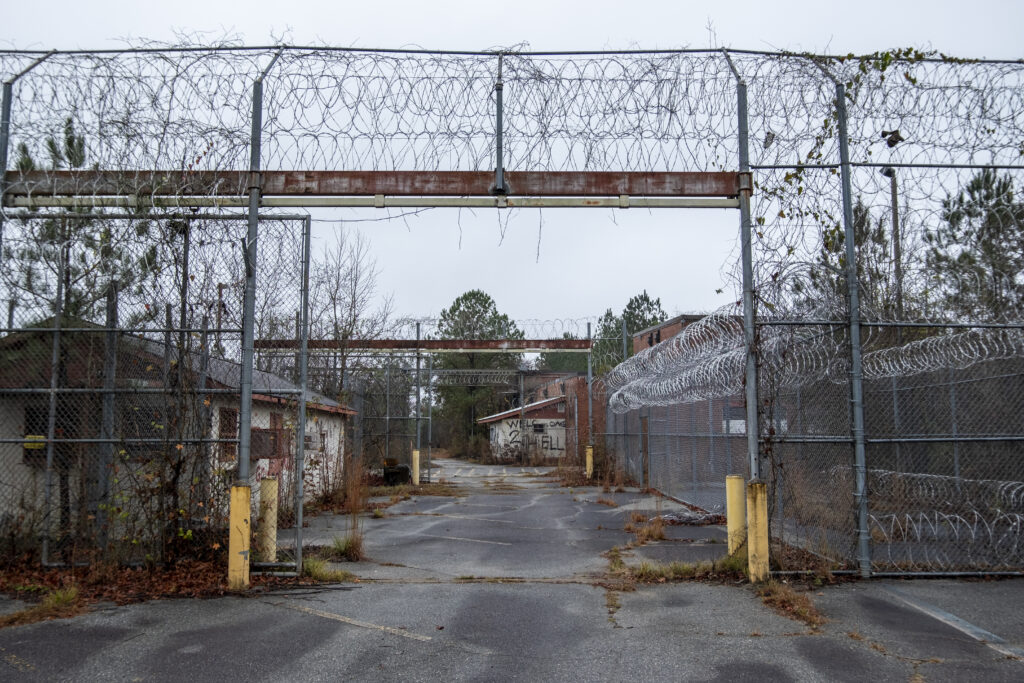
Rivers Tuberculosis Hospital became Rivers Prison. The Washington Building became the Men’s Prison; followed by the Holly, Ingram, and Kemper buildings, which became Scott State Prison.
The same grounds that had been built to offer treatment were now, in a way, used for incarceration.
Our jails and prisons are the largest providers of mental health care in our country.
– Jessica Whitehead
That quote from Jessica stopped me cold.
When large psychiatric institutions closed during the deinstitutionalization movement of the 1960s and 70s, the idea was that community-based care would replace them. Smaller facilities, outpatient programs, and a more humane approach.
But that system was never fully built, and the shift illustrates a much wider failure: the rollback of institutional mental-health infrastructure without an adequate community-based system to replace it.
People with serious mental illness ended up back where they started: in jails, in prisons, on the streets.
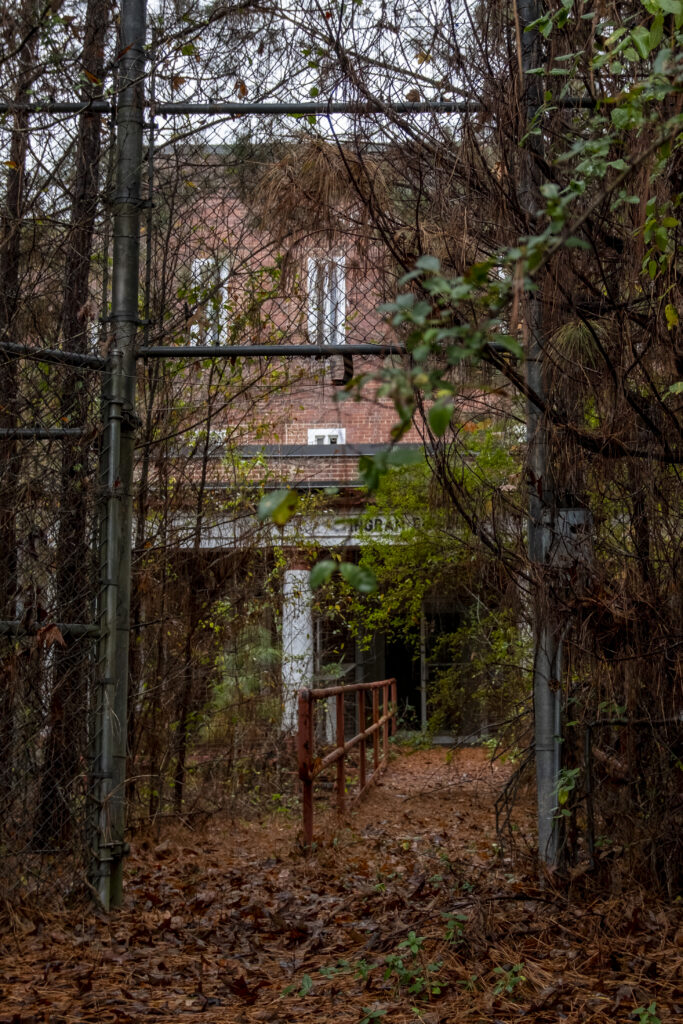
The Buildings That Still Stand
Walking the campus today, you can still read the history in the architecture.
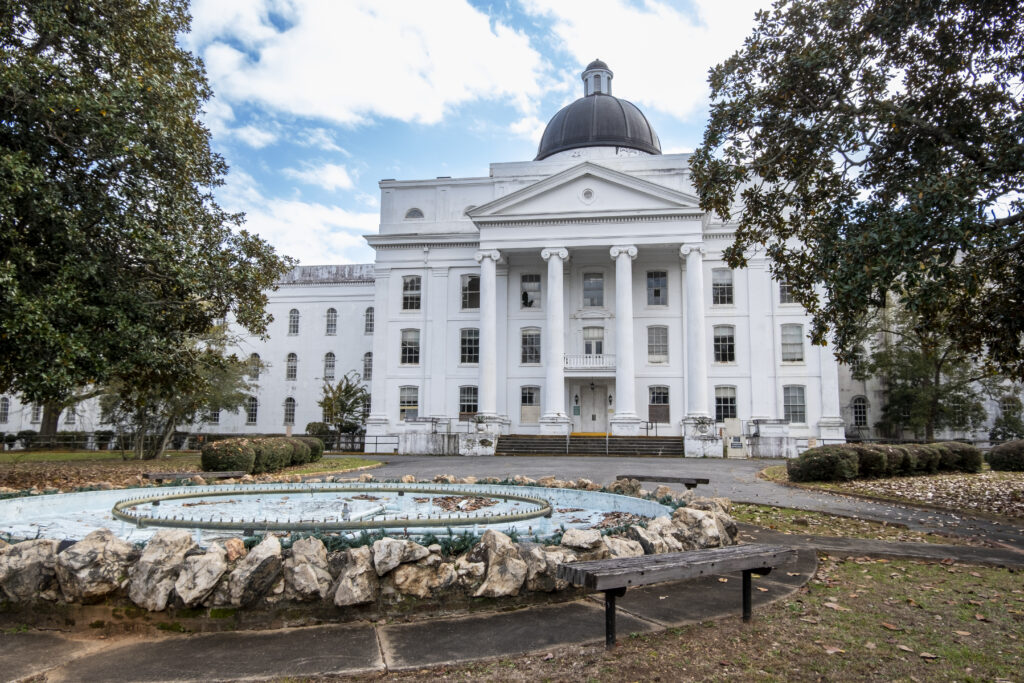
The Powell Building (known as the main building) was the foundation of the hospital, constructed in stages that began in 1842. It served as admissions, patient housing, and administration all at once.
The Binion Building, opened in 1946, housed forensic patients, people deemed unable to understand court proceedings or found not guilty by reason of insanity.
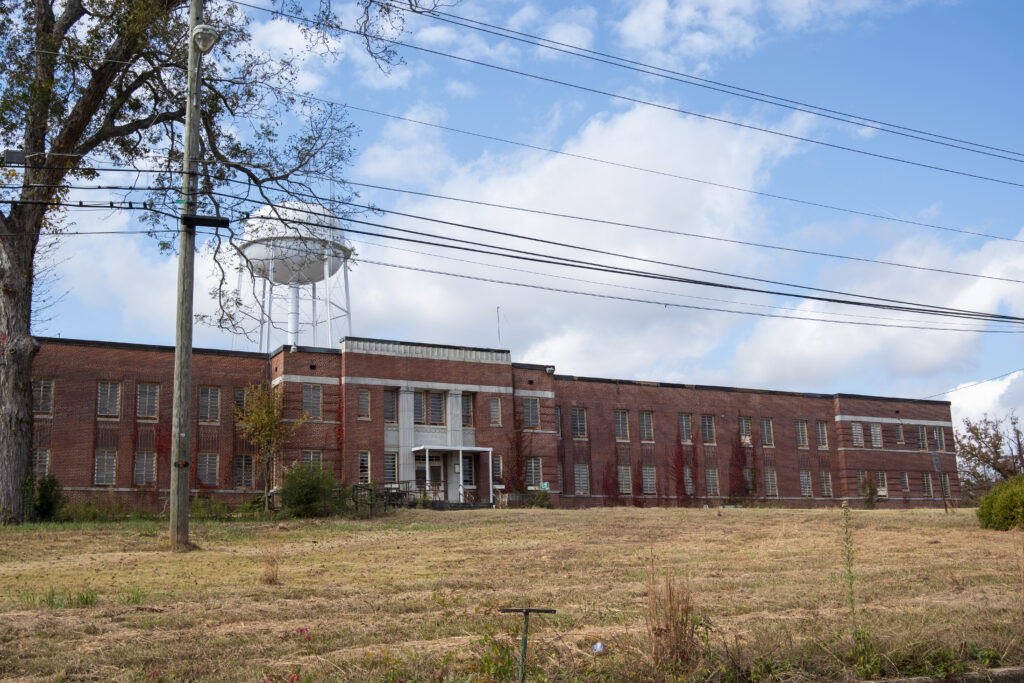
The Peyton Cook Building came later, as a more modern forensic hospital, named for a former chaplain who served the campus for decades.
An original map of the entire campus, once hung in the Arnold Building, can now be seen at the Central State Hospital Museum.
Looking at it, you start to understand the scale of what existed here.
Central State wasn’t a hospital in the way we think of hospitals today, but an entire infrastructure built to contain and care for people the outside world didn’t know how to help.
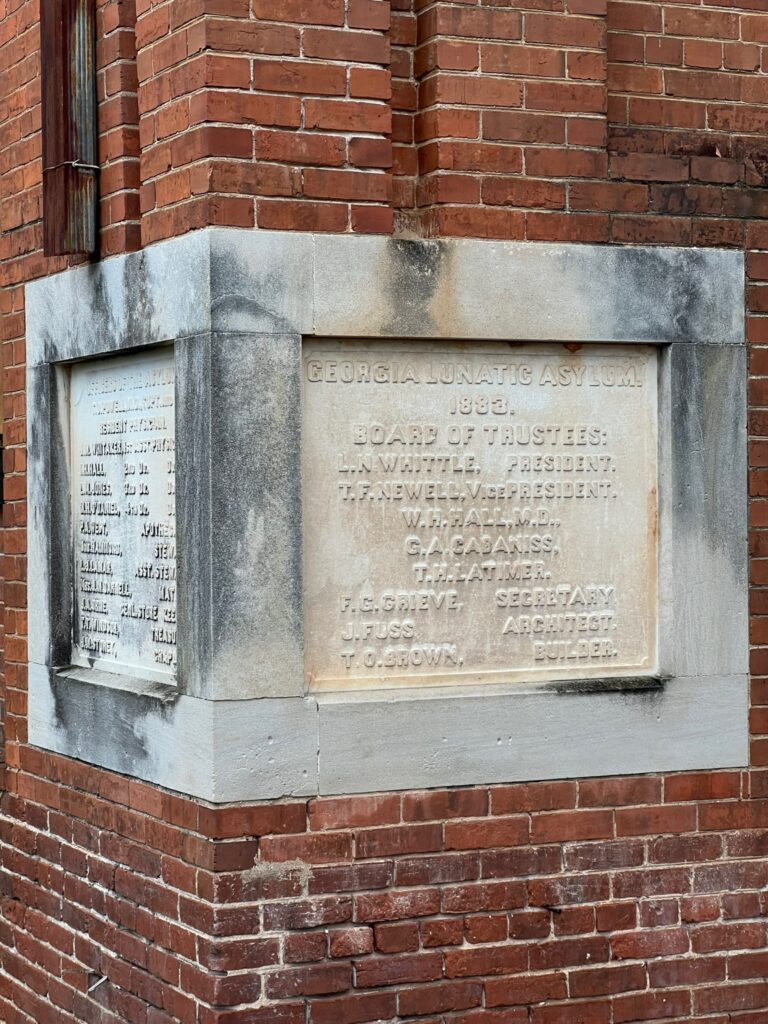
Walking around the campus, you may spot some original cornerstones on a couple of buildings, on which you can read the words carved into the stone: “Georgia Lunatic Asylum.”
More than a great piece of historic architecture, it’s a reminder of how language changes, even when the stigma underneath it doesn’t.
🏛️ Notable buildings on the Central State Hospital campus:

• Powell Building - the main building and one of the original structures dating to 1842; served as the admissions and administrative hub for much of the hospital's history.

• Binion Building - housed forensic patients for decades until around 2008-2009 when the hospital closed.

• Peyton Cook Building - the modern forensic hospital, named for a chaplain who dedicated his career to serving patients here.

• Rivers Complex - notable for its marble entryways and historic tunnels; originally built as a tuberculosis hospital before becoming part of the prison system.

• Jones Building - opened in 1929 and housed patients of the Psychopathic Hospital of Milledgeville State Hospital and later used as a medical-surgical center. Has been closed since 1979.
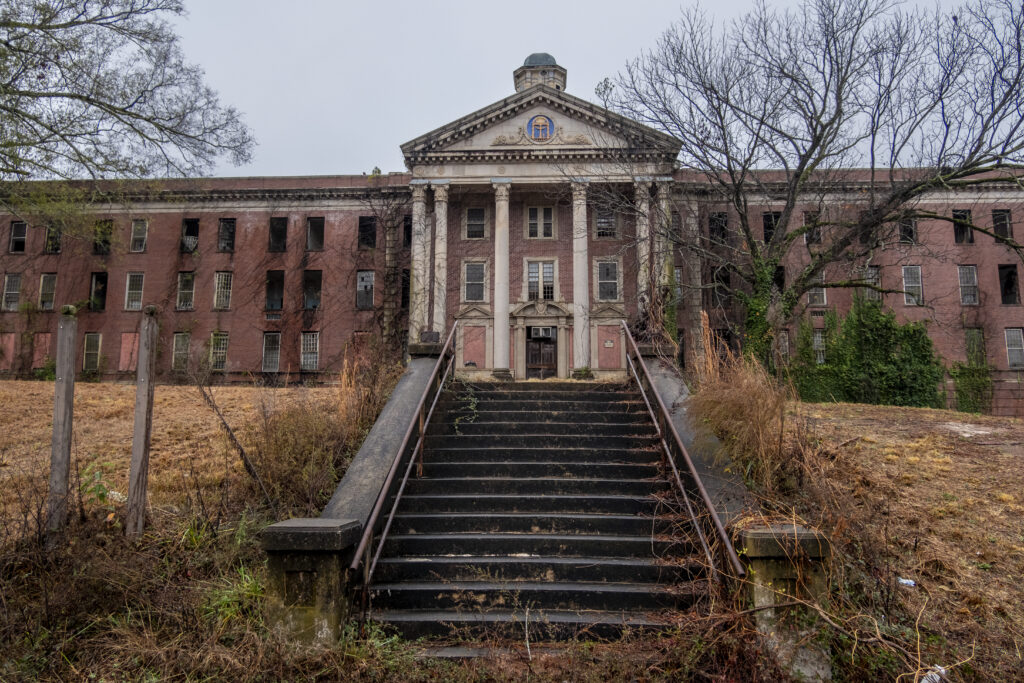
What Happens When No One’s Watching
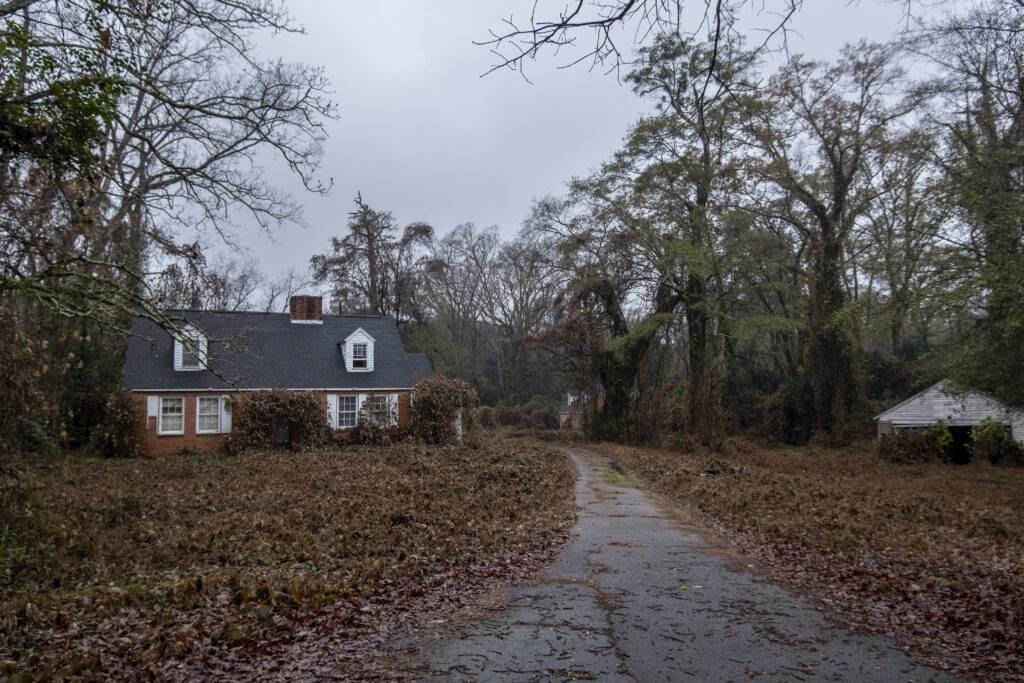
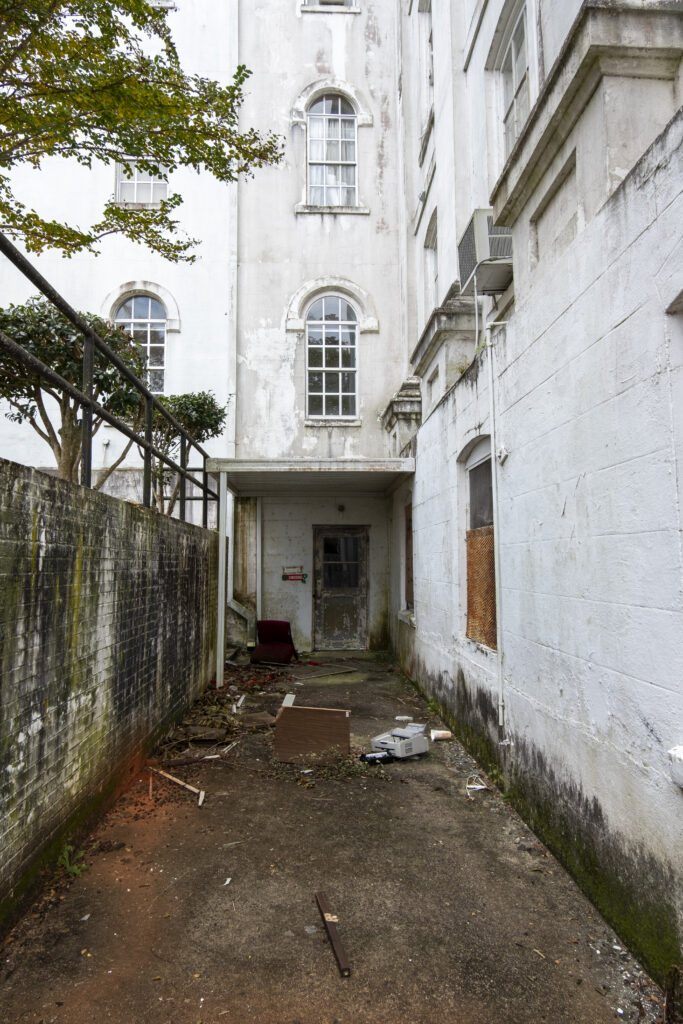
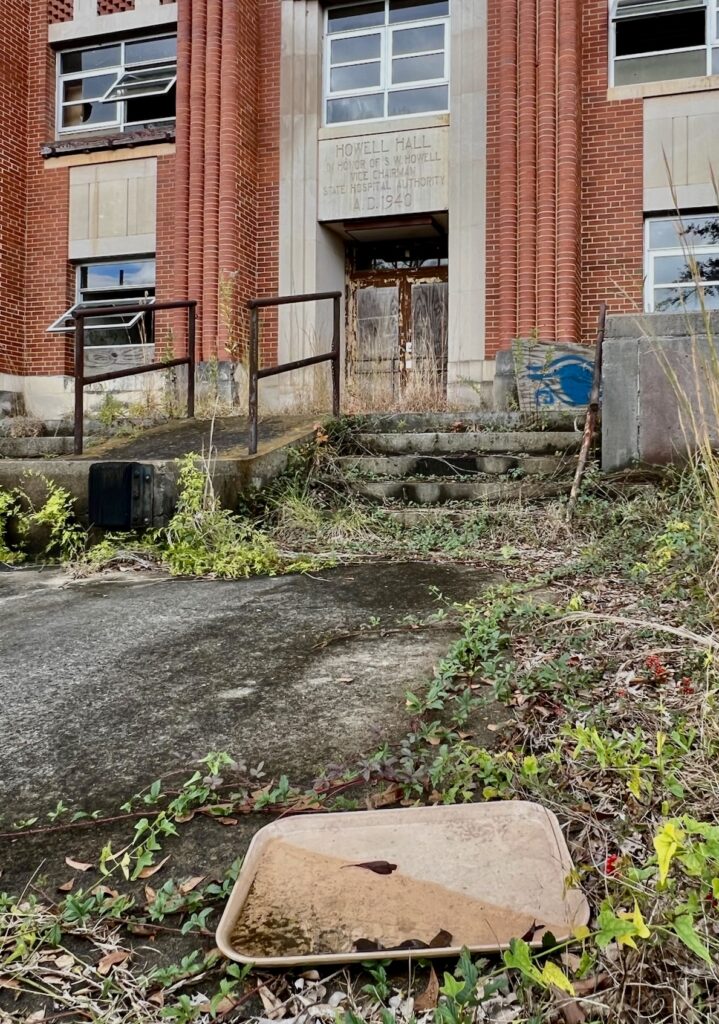
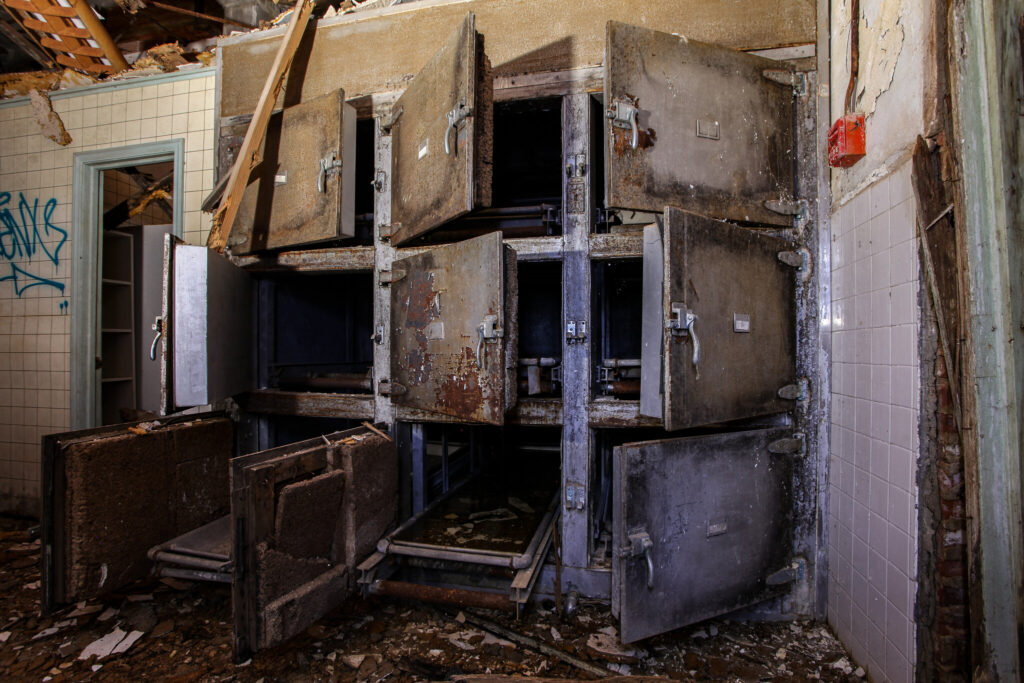
When the patients left and the staff moved on, the buildings didn’t disappear. They just started to decay.
Windows shattered. Walls crumbled. Vandals constantly break in and use whatever they can find as projectiles – furniture, equipment, and even pieces of the building itself.
What had taken decades to build was undone in a matter of a few years.
That rapid deterioration is a sad and ongoing problem. Every year that passes makes restoration more difficult and more expensive. The longer these buildings sit empty, the harder it becomes to save them.
But not everyone has given up.
Recent acquisitions have brought new energy to parts of the campus. Some buildings (Jones, Green, and Walker Buildings) are being repurposed into housing, retail, and event spaces.
The goal is to protect the architectural heritage while injecting the campus with new life, new uses, and new reasons for people to come here.
It’s a delicate balance.
You can’t just gut these buildings and pretend they were always meant to be apartments or coffee shops. The history is in the walls. The question is whether developers and preservationists can work together to honor that history while giving the campus a future.
The Woman Keeping This History Alive
In the middle of all this uncertainty, there’s a small museum, and there’s Jessica Whitehead: photographer, author, and mental health advocate.
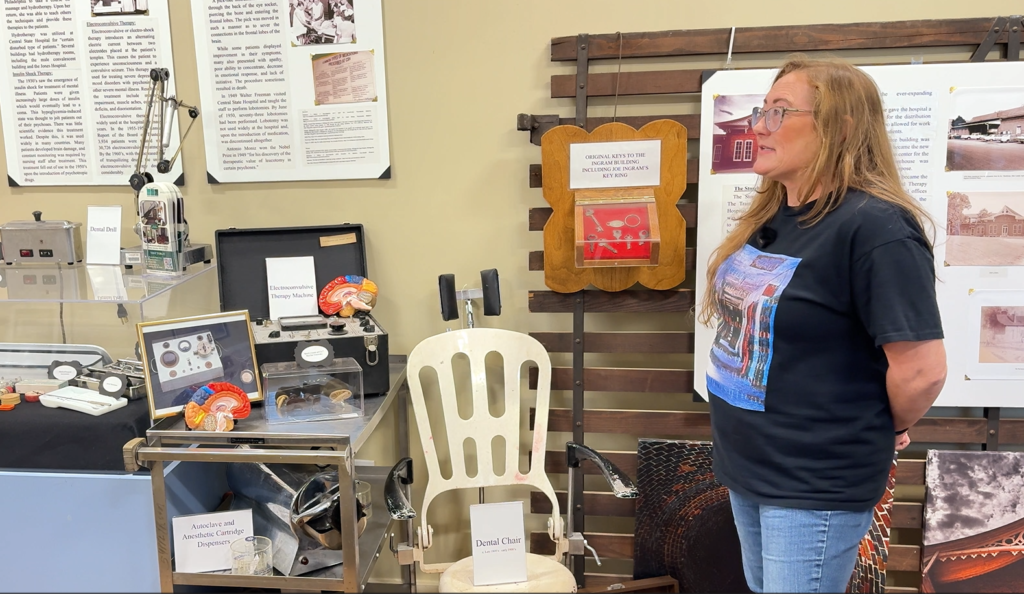
A photography project and a dedicated museum now anchor public memory on the grounds. Photographs line the walls, interesting artifacts sit in glass cases, and captivating visuals take us back in time to what life was like at Central State Hospital.
Together, they knit together patient stories, clinical history, and the lived experience of staff and families who spent their lives connected to this place.
But still, some of the most powerful moments come from personal testimony. People who grew up with family members who worked at the hospital, and others who had relatives who were patients.
Their stories bring the history into sharp, emotional focus on how this institution was such a big part of so many lives.
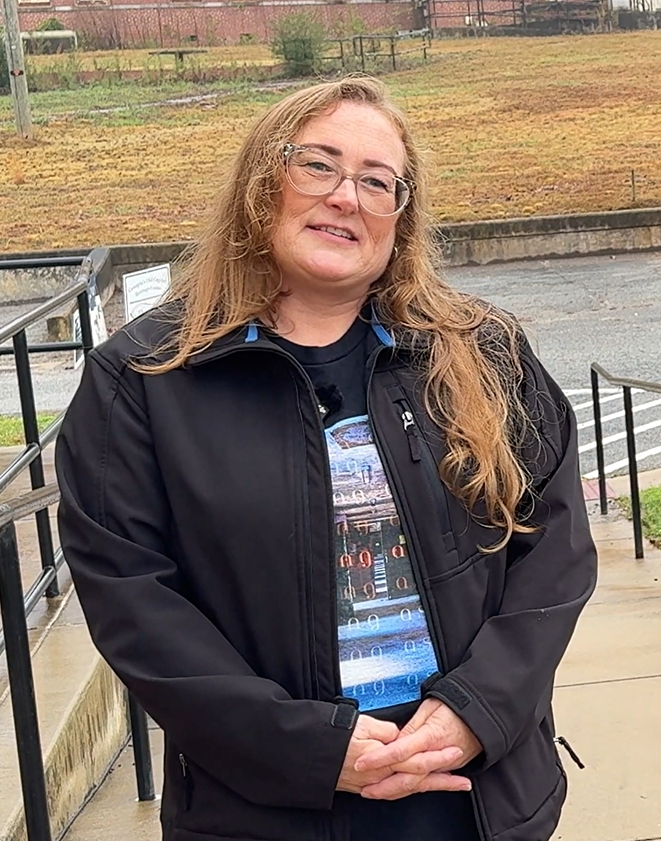
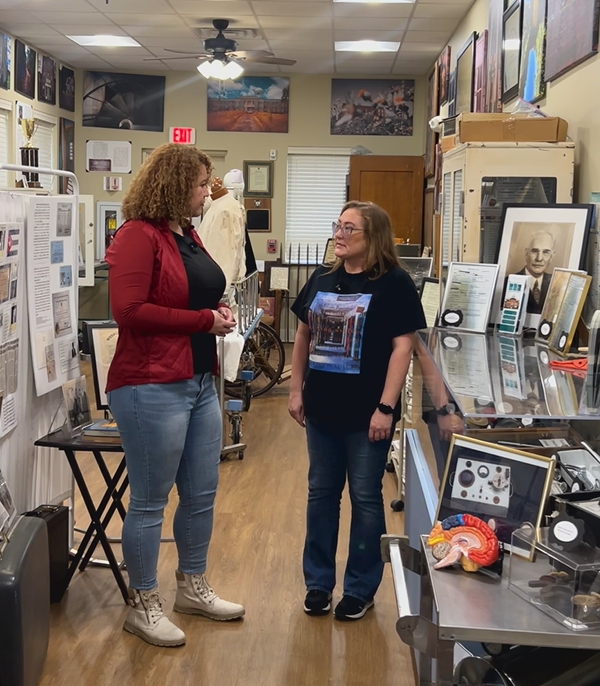
Jessica’s role in curating this collection stemmed from her 11 years of experience in the mental health sector and her deep appreciation for her mentor, Dr. Greg Jarvey, who had worked at Central State Hospital.
Following Dr. Jarvey’s passing, Jessica began a photography journey that later became an outlet fueling her desire to engage in mental health advocacy, including sharing her personal experiences.
Her book Seeking Asylum was the first step into becoming the Curator and Director of the Central State Hospital Museum. With the museum, she aims to highlight the area’s history to attract visitors to the campus and educate them about mental health treatment.
🎟️ Central State Hospital Museum is located at 95 Depot Circle, Milledgeville, GA 31062 | Admission: $10 per person | Hours: Saturdays from 10 am – 2 pm or send email for appointment.
Why This Place Still Matters
When I asked Jessica what she hopes visitors take away, her answer was simple: empathy.
And speaks a thousand words.
Learning how people lived, worked, and often died in institutional settings reframes how we think about mental health today. It forces us to ask uncomfortable questions.
How do we treat people who can’t care for themselves? What happens when we look away?
The hospital’s story is not only architectural. It is human.
A story about families who made impossible decisions and staff who showed up every day to do difficult work without the necessary resources.
Patients who found moments of connection and creativity despite everything. And a society that built this place, filled it, and then…walked away.
The 25,000 Who Never Left
There are five known cemeteries scattered across the Central State Hospital grounds – three historic and two non-historic ones.
According to the National Register of Historic Places, the historic cemeteries are the Cedar Lane Cemetery (historically known as Asylum Cemetery), the New Colored Cemetery, and South Camp Creek Cemetery.
Altogether, the five cemeteries on campus hold over 25,000 patients.
Most of the graves have no headstone. No name carved in marble. Just a small cast-iron stake with a number stamped into it, corresponding to the patient’s record.
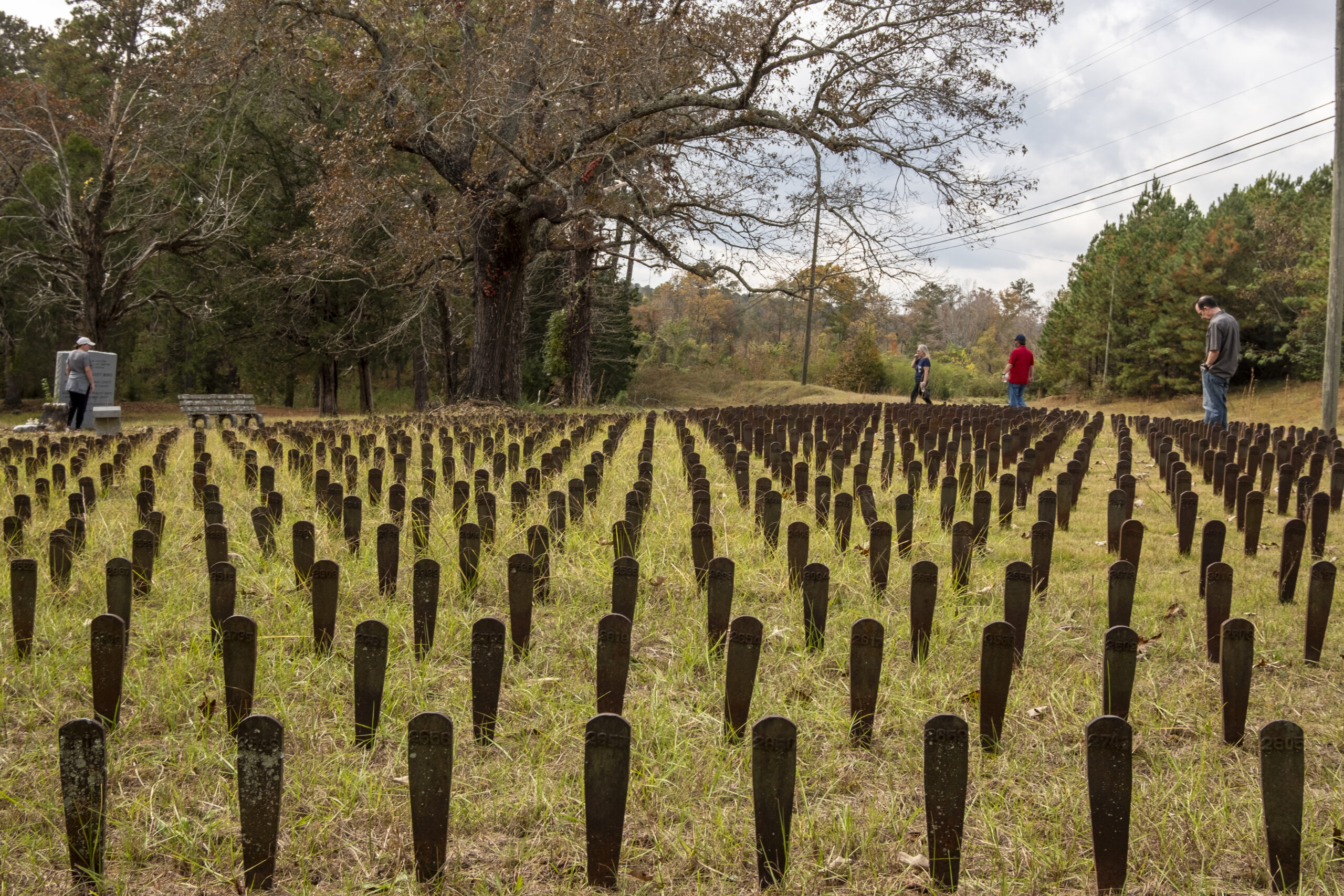
For decades, the cemeteries sat neglected. Groundskeepers would pull up the numbered markers to make mowing easier and toss them aside, into the woods. The people buried here had become so invisible that even their grave markers were treated as inconveniences.
That changed in 1997, when a cemetery restoration project began at Central State Hospital. What started as a local effort to address the neglected burial grounds sparked a movement nationwide to memorialize patients buried at state psychiatric hospitals.
The Georgia Consumer Council pledged to restore the cemeteries and build a memorial. A grassroots campaign raised funds to construct a gate and display over 2,000 of the displaced iron markers.
These are markers that were found on the ground and in the woods. Since their original placement was lost, the markers were arranged here in memory of those buried in the cemetery.
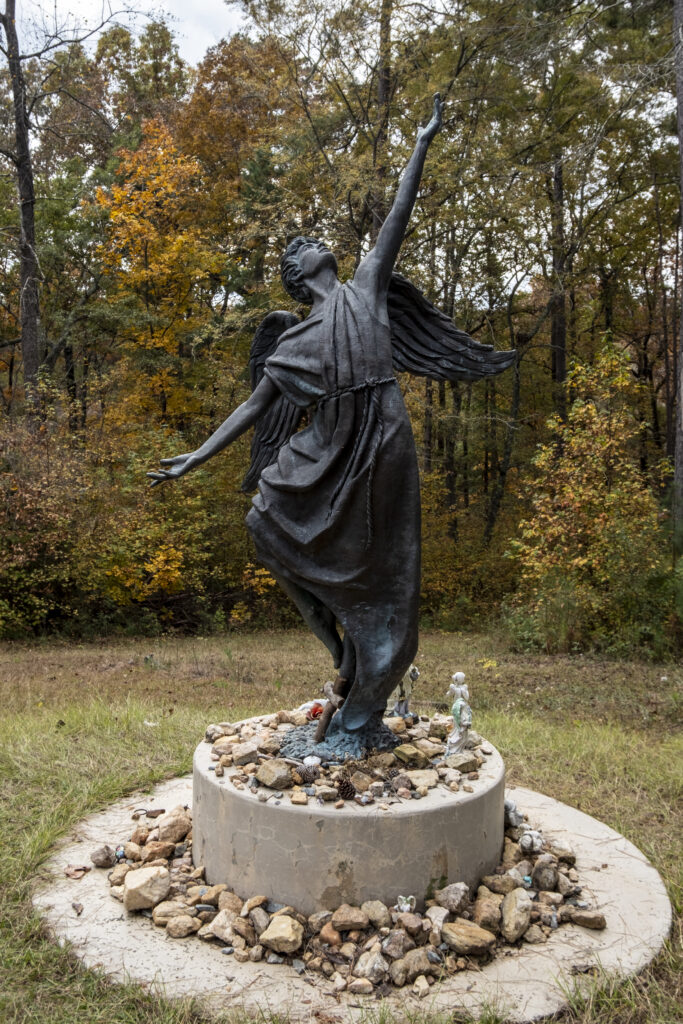
A life-size bronze angel was placed in Cedar Lane Cemetery to serve as a guardian over the dead.
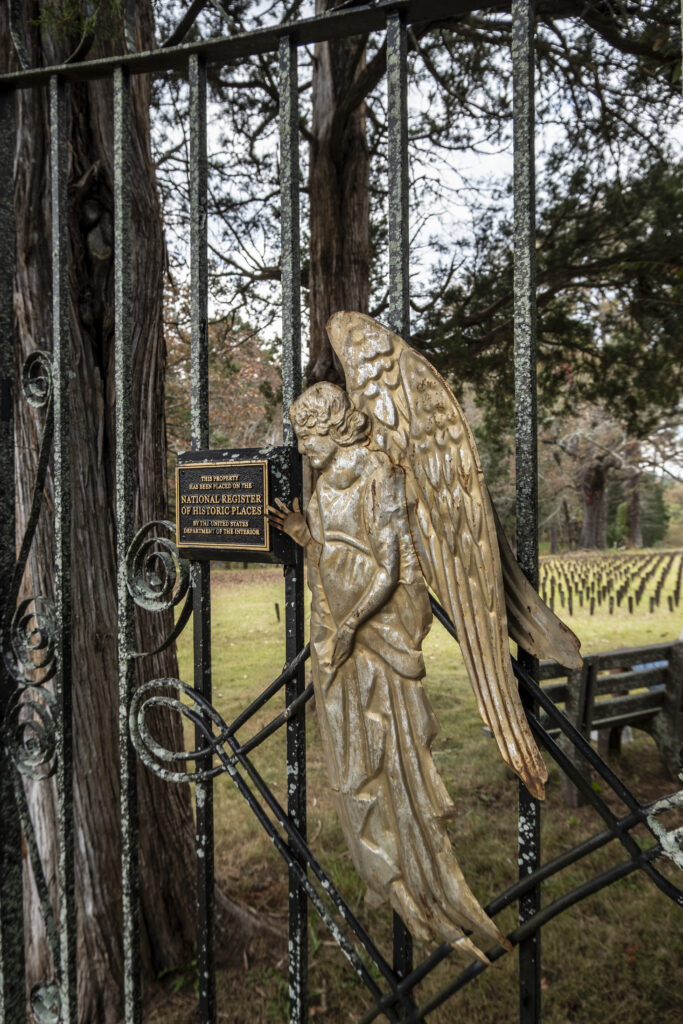
Walking Cedar Lane today, you see rows of small metal stakes arranged in the grass. Each one represents a person who arrived here with a name, a history, and a family somewhere.
And who then left the world identified only by a number.
What Comes Next
Closed since 2008-1009, Central State Hospital’s future is still being written.
Redevelopment plans for The Big 3 – Jones, Green, and Walker buildings (located along the Pecan Grove), are underway. The vision is to preserve the beauty of the historic buildings while converting them into spaces the community can use.
Done well, this approach could protect the architectural heritage while bringing economic activity back to Milledgeville.
But it has to be done thoughtfully.
More than just about saving bricks and mortar, preservation as a whole is about keeping the stories alive.
The patients who lived and died here deserve more than a plaque on a renovated building. They deserve to be remembered as people, not as ghosts.
Using the campus as a platform to advocate for better access to mental health services today would be the most meaningful tribute of all.
Not just honoring the past, but learning from it.
Final Thoughts
In simple words, I feel like Central State Hospital is a mirror.
In many ways, it reflects how a society treats its most vulnerable members. The campus holds architectural splendor and troubling history, filled with moments of care and moments of cruelty.
Creativity born from confinement and echoes of thousands of lives lost in the same campus, where their families once believed they would receive help.
Remembering that complexity matters.
It’s easy to look at a crumbling building and see only decay. It’s harder to remember the people who once walked those halls. It’s emotional to question the why.
This campus calls us to do better.
To build systems that provide dignity, access, and hope for people living with serious mental illness today. To stop cycling the most vulnerable people through jails and emergency rooms and back onto the streets.
Central State Hospital is not just a place to visit. It’s a question we have to answer: how will we treat the people who need the most help?
Hey, I’m Yanitza 👋 Certified travel advisor, U.S. destination specialist, and hidden-gem hunter with over 8 years of experience helping travelers explore deeper and travel slower. I specialize in crafting authentic, stress-free adventures from small towns to scenic hikes and scuba dives. I’m a firm believer that the best stories happen when you venture beyond tourist hotspots. When I’m not planning getaways or writing travel guides, I’ll probably be home rewatching The Vampire Diaries like it’s my job and daydreaming about future adventures in Spain.